ID Bridge
Connecting unhousing individuals with the means to secure longterm housing
Service
Mobile App Design
Year
2025
—————————————————
ID Bridge
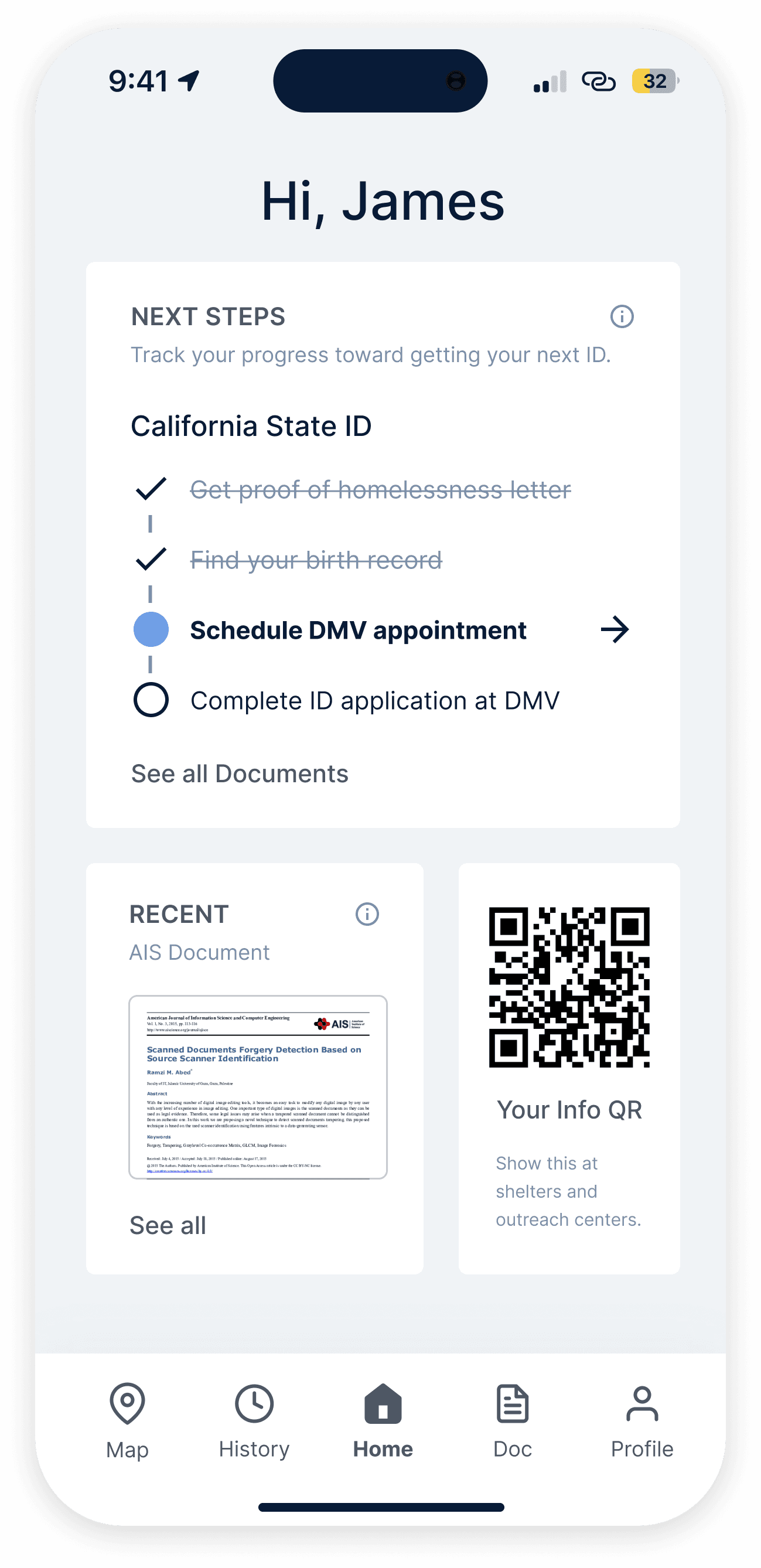
ID Bridge is an app to help unhoused individuals progressively build a verifiable portfolio of documents and recommendations to secure long-term housing.
Awarded First Place in Google Designathon.
Role
User Researcher - Narrowed research, identified gap within user space, found support for user needs, used research to assist with design choices, and helped with overall app design.
Design Skills
Figma, Figjam, Google docs, Accessibility Design, User Research, AI Research, NotebookLM
Type
Designathon - 6 hours, 2025
—————————————————
Overview:
Problem
Unhoused individuals face barriers to housing due to difficulties verifying identity. There's a need for simple, trusted tools to help them build and share verifiable documentation.
Solution
An app that connects unhoused individuals that verifies documents and referrals to help find long-term housing. Think of it as an “Identity Bridge” between people, shelters, and agencies — lightweight, offline-friendly, and privacy-first.
Our process
Research
We began our research searching for key information regarding what user pain points were when finding shelter and what they needed. I researched on google scholar, Reddit, and used chatgpt to generate possible key words to find relevant data that backed up the top 5 concerns when it comes to unhoused individuals.
—————————————————
Findings:
“The hardest thing and the most consistent barrier to housing was that a lot of my clients did not have any identification and had no pathway to getting any.”- Reddit User (echoed by many others)
“In the survey, more than half of participants (53%) noted a lack of documents as a barrier to finding permanent housing” - The California Statewide Study of People Experiencing Homelessness, 2023
—————————————————
Iterations of ideas
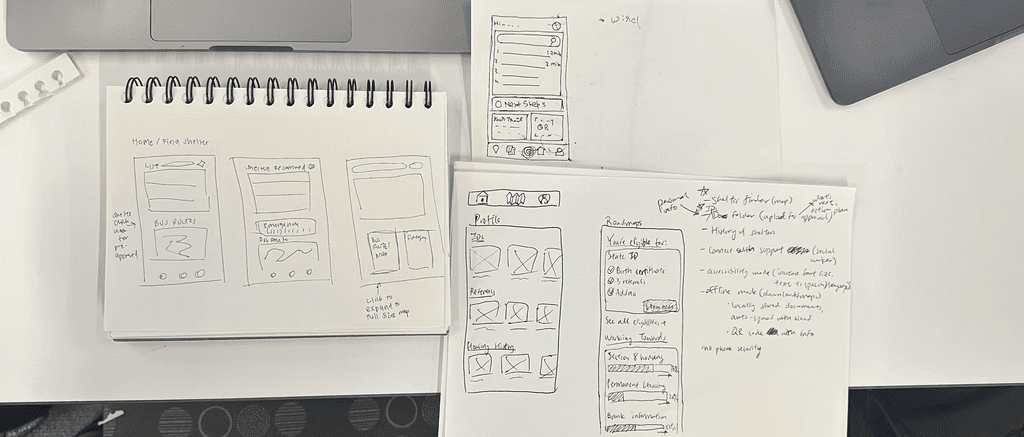
As a group we generated ideas in a circle until we identified solutions for the gaps. We wrote down key features in a list on Google Docs of we wanted to include through rapid ideation.
Chat Bot - Provides next steps
Suggestion for next steps
Documentation Trail - Upload Info
Social Worker Connection - Ability to speak to a representative.
Choice on what to share with social workers
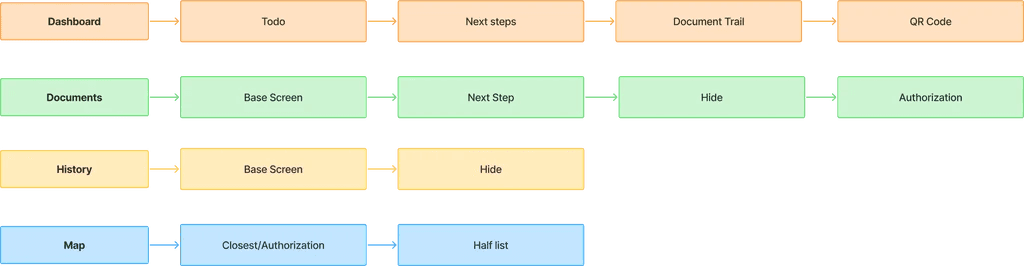
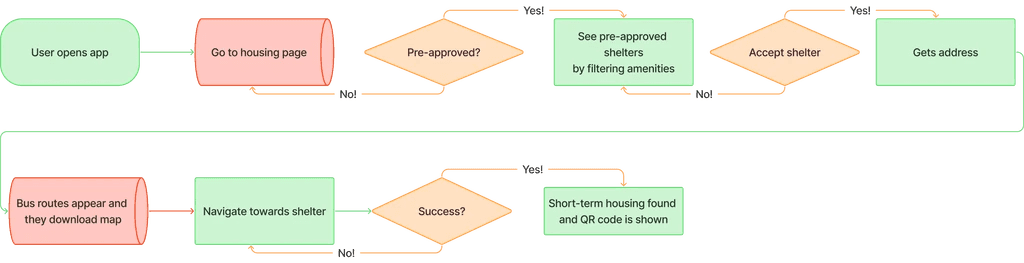
We then wireframed out the most impactful ideas onto paper
—————————————————
Our solution
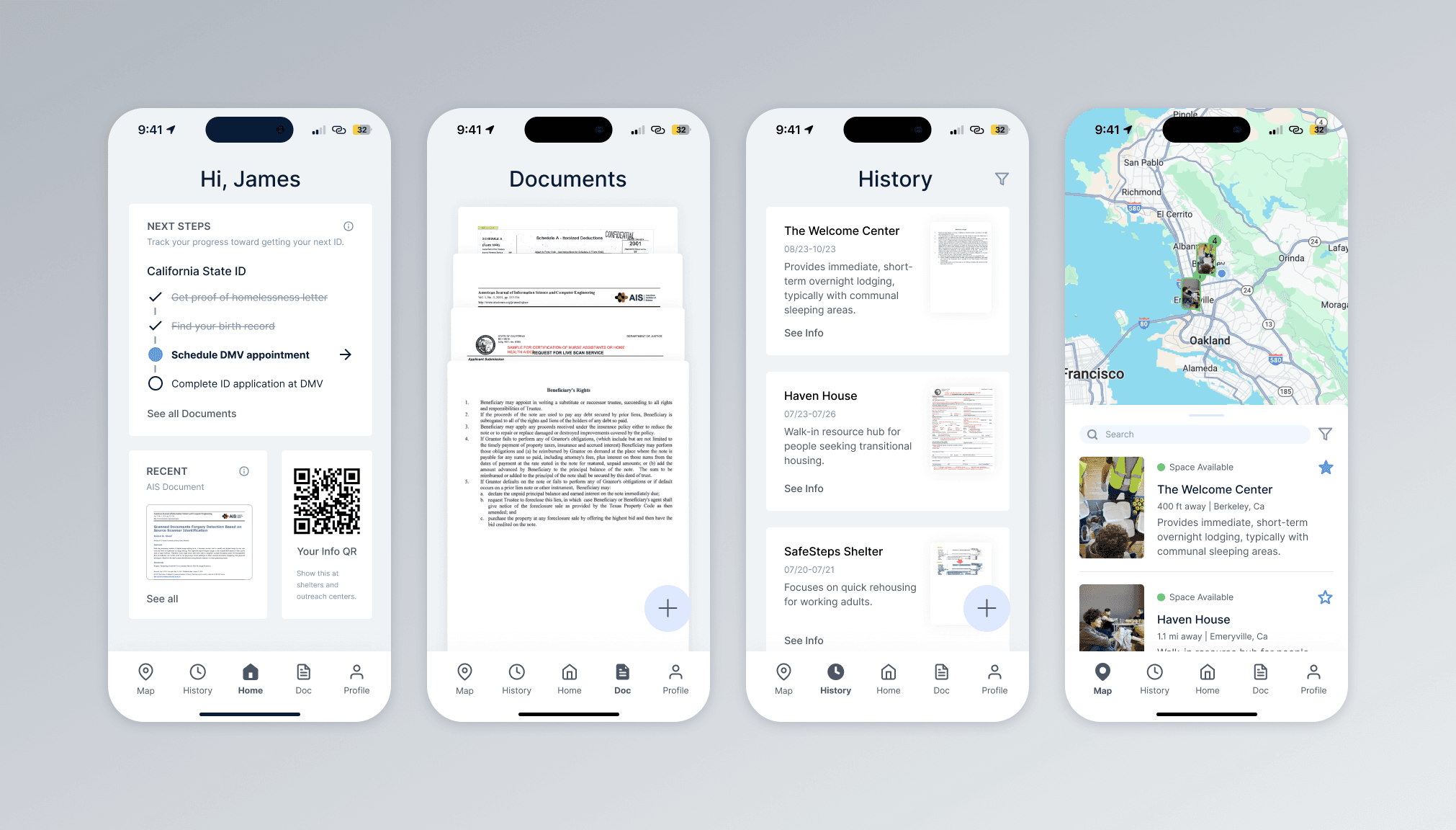
When losing any sort of identification, it becomes extremely difficult to receive long term housing. A lot of people feel lost and stuck in this ongoing cycle of not being able to get the assistance that they need. ID Bridge helps users get identified quicker through a document trail and connection to social worker for next steps. We also included offline mode for routes to shelters and a list of shelter availability.
How does this address our problem?
ID Verification
-Users could upload all documents and referrals from others they know to get identified. QR Code with your history allows for quick verification
Social Worker Connection
-On the social worker side, a user can get next steps based on their qualifications to get long term housing options.
Shelter Availability Listings
-A user can view the closest shelters that are available and how many spots are left. This will ease pain points of traveling far for full capacity shelters
Offline Map Routes
-Bus routes and a map will be available for offline usage to reach your shelter destination
Reflection
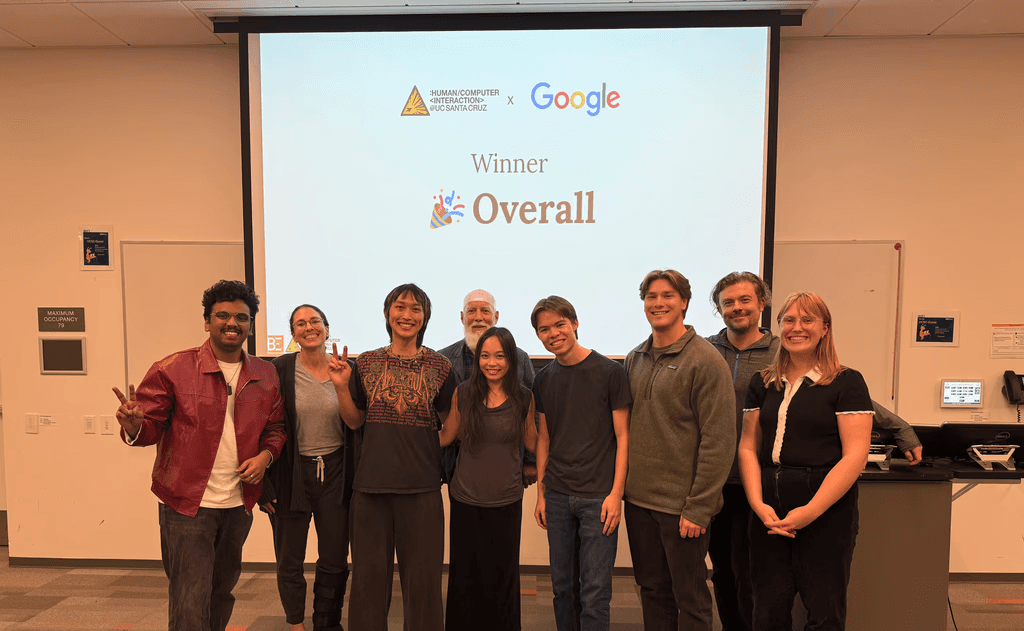
I truly enjoyed working with my team and found this 6 hour challenge to be super rewarding. I learned a lot abut the use of AI in research, ideation, and design and how it could accelerate the process. It was especially fun and challenging researching such a diverse problem within such a short time. I think its important to also talk about how the use of AI can be beneficial in speeding up some tasks it was important to remember that AI can be extremely biased and hallucinate. Especially when working with an under represented population, AI has been trained on biases datasets of users who do not typically reflect those of minority populations. A special thanks to my group members, the HCI program, and representatives from google for the insights and experience I gained.
Next Steps: If we had more time and scaled this app to real world use, I would love to take the time to conduct usability testing with real users. To research our target population and see if what we developed really addresses the issue that we see as designers. Conducing surveys and research into this user group to see if we are addressing the needs of the users.
